

Vegan Cinnamon Babka
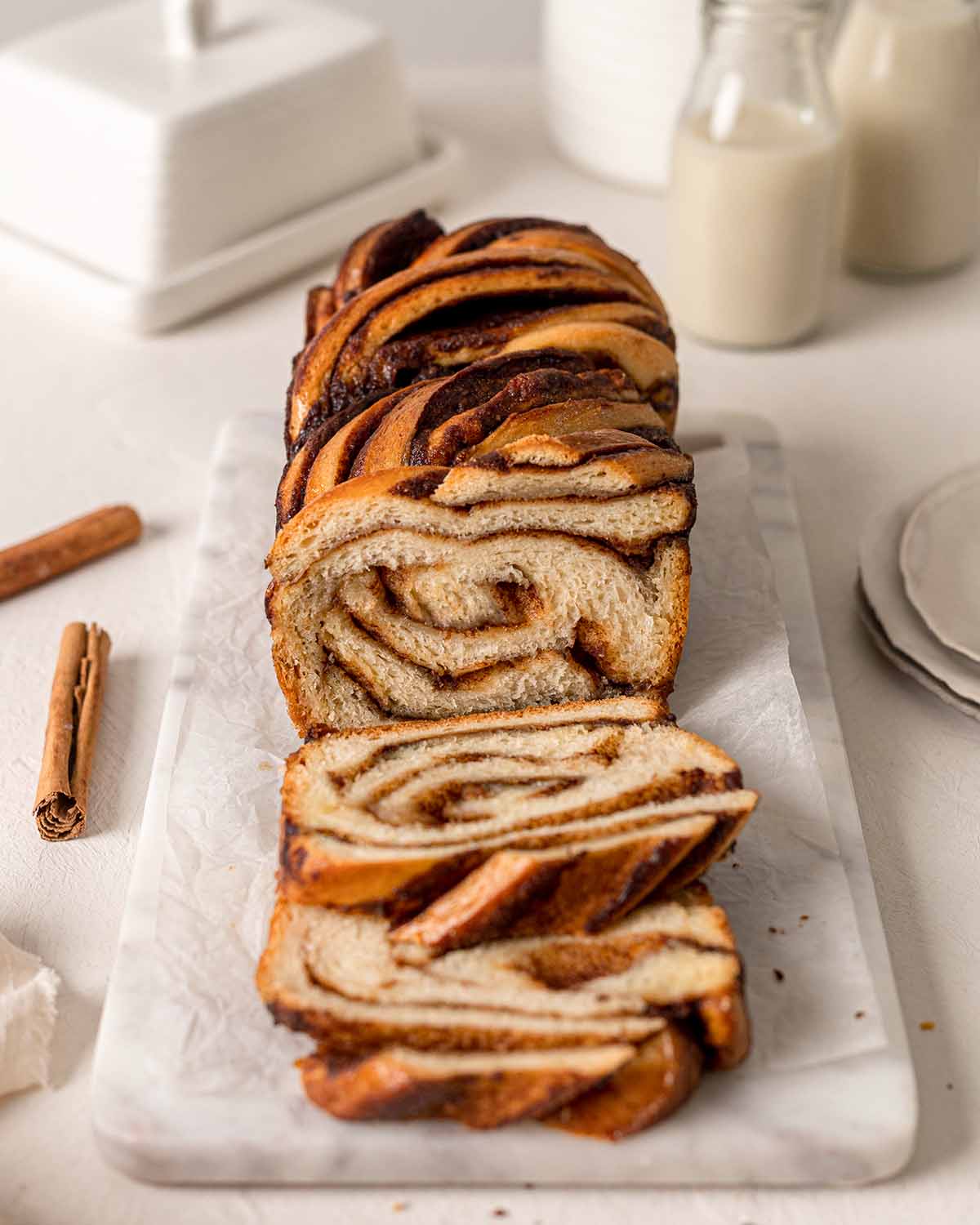
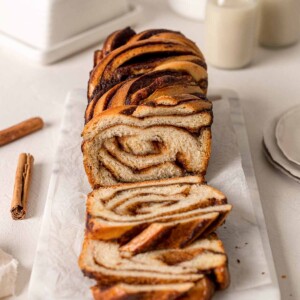
Vegan Cinnamon Babka with a soft buttery brioche-style dough and swirls of cinnamon sugar. This babka is easy to make with the help of step-by-step pictures in the post!
Ingredients you’ll need
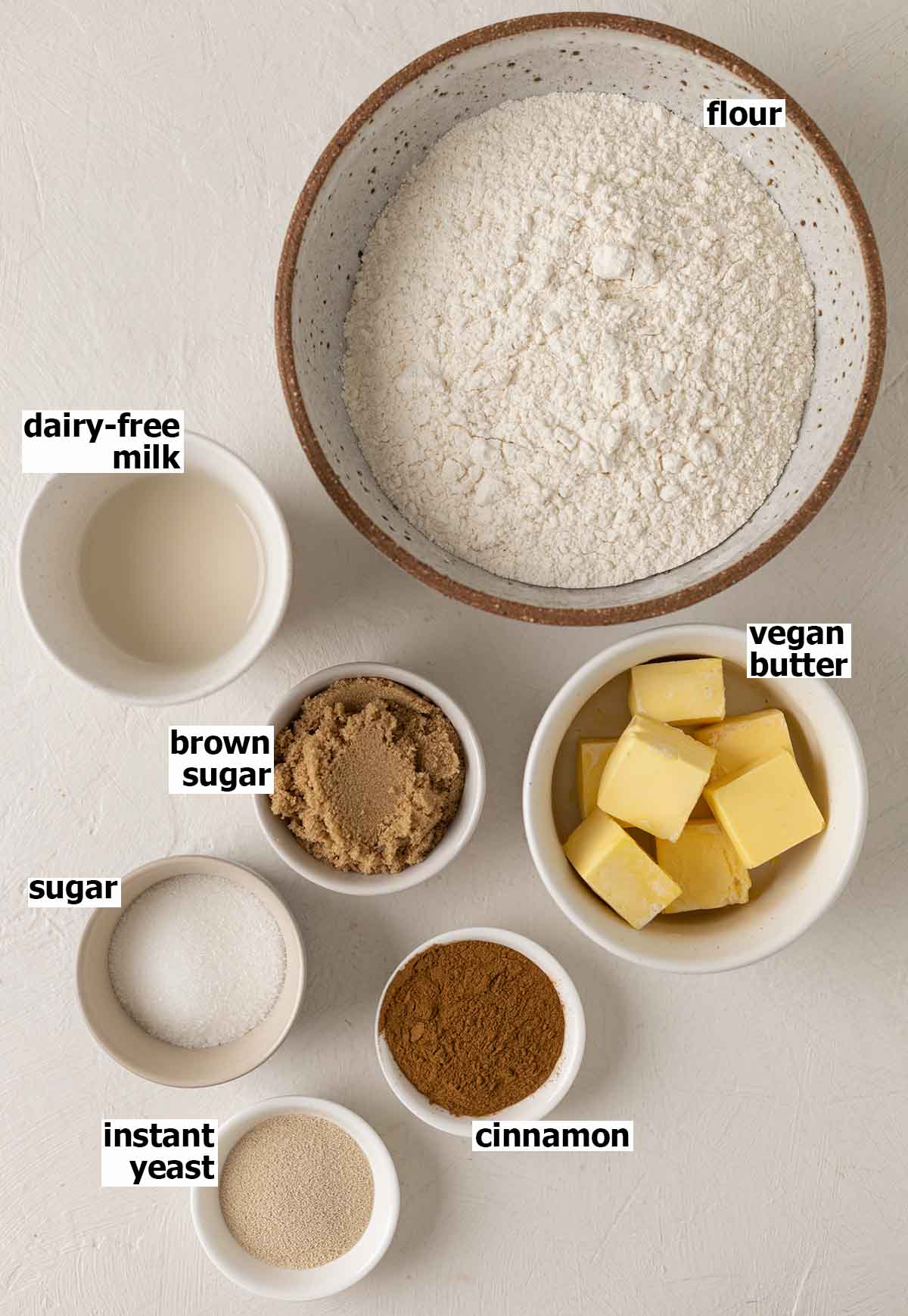
The full list of ingredient quantities and instructions are in the recipe card at the bottom of this post.
Notes about the ingredients and substitutions
All-purpose flour or bread flour. All-purpose flour makes a slightly cakier vegan babka whereas bread flour makes it taller and slightly ‘chewy’ like regular bread.
Vegan block butter for richness and flakiness. Alternatively, you can use a spreadable vegan butter but you will need to decrease the milk or add more flour.
Granulated sugar for the dough and brown sugar for the cinnamon filling. Alternatively, you can use brown sugar for both.
Instant yeast, which is the easiest and quickest yeast to use. Or you can use dried or fresh yeast as long as you proof it beforehand.
Alternatively, for a yeast-free cinnamon dessert, check out my vegan cinnamon quick bread or vegan coffee cake.
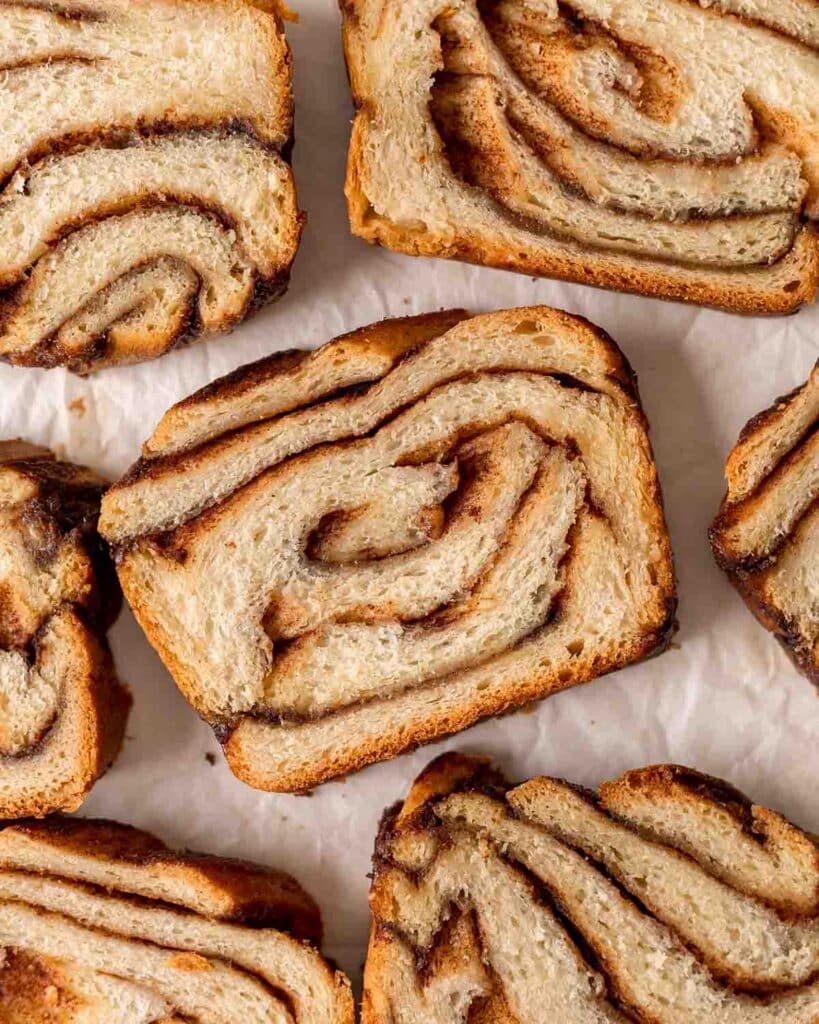
Making the dough
If you’re using instant yeast, simply add all the dough ingredients into the bowl of a stand mixer and knead until soft and stretchy. If you don’t have a mixer, combine the ingredients in a large bowl then knead the dough on a clean floured surface.
For the best vegan babka, I recommend kneading the dough until it reaches the windowpane stage. If you stretch a piece of dough between your fingers, it won’t break. This shows that the dough has a strong gluten structure (which helps the dough rise).
The final dough should be soft and tacky but not sticky. If your dough is too dry, add a dash of milk and knead again. If it’s too wet, simply add a dash of flour at a time and knead.

First rise for the dough
After kneading the babka dough, place it in a clean bowl and allow it to double in size.
It can take anywhere from 1-2 hours (in a warm home) to 4 hours (in a cool home) for the dough to double in size.
If you’re short on time, make sure the babka dough is in a warm spot! The dough is ‘enriched’ with butter and the butter needs to stay warm and malleable if you want to dough to rise quickly.

How to shape babka
The first step for assembling the vegan cinnamon babka is similar to making cinnamon rolls. We need to spread the filling on the dough and roll it up into a log.
If your dough is sticking to your rolling pin or surface, add flour sparingly. We don’t want to add too much flour as it will make your vegan babka drier.
We’re rolling the babka from the short side as a shorter log is easier to place in your loaf pan!
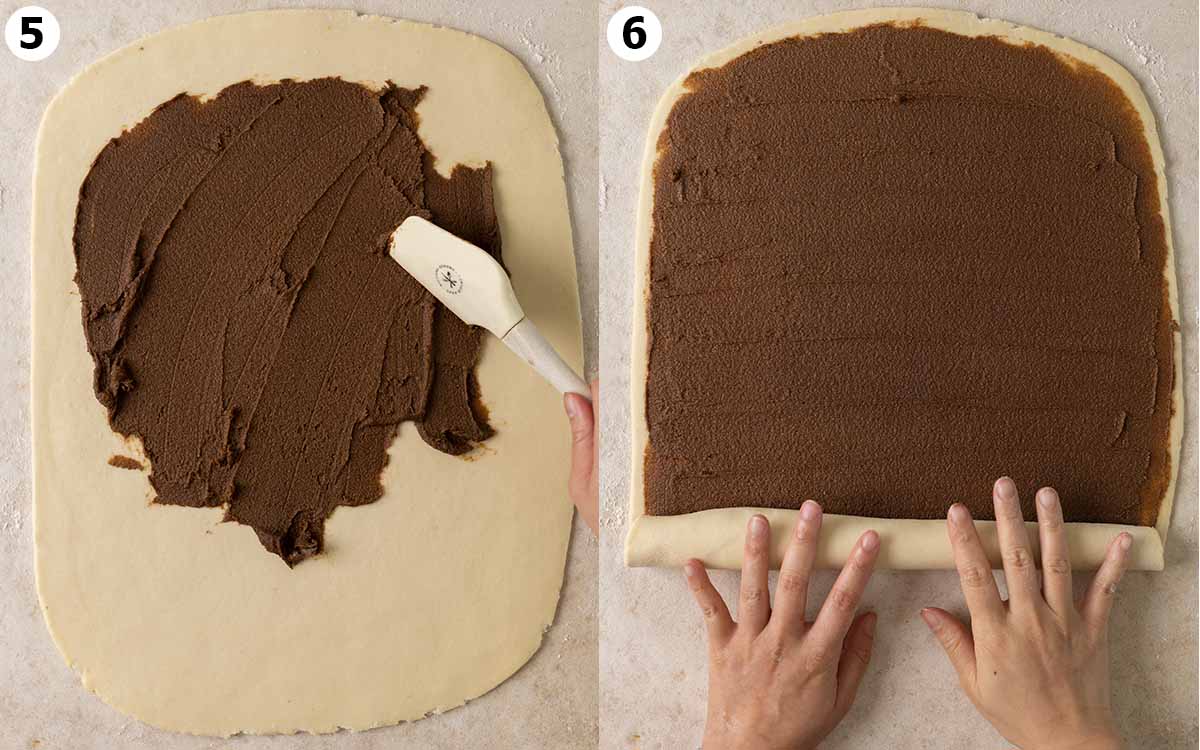
Shaping a babka may look intimidating, but I’ve got you covered! Here are some tips to help you:
- Take your time and breathe!
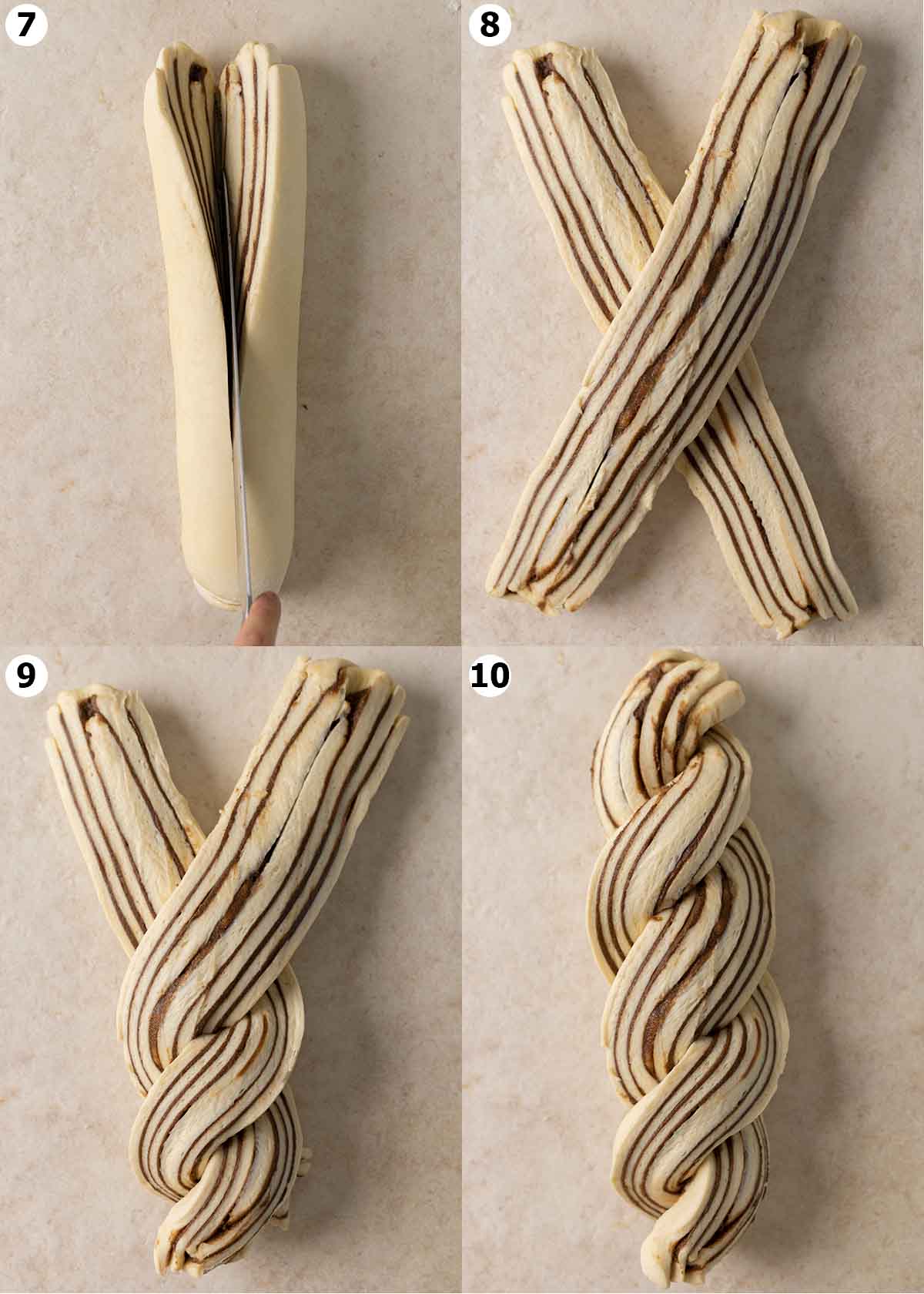
- When cutting the babka lengthways, use the sharpest knife that you own (serrated or regular). For a neat cut, use long smooth motions. (Image 7)
- Make an ‘X’ shape with the strips of dough. This means you won’t have to deal with super long strips every time you twist the dough. (Image 8 & 9)
- If your babka is longer than your loaf tin (Image 10), ‘squish’ your babka to make it around the same length as your tin.
Second rise for the babka
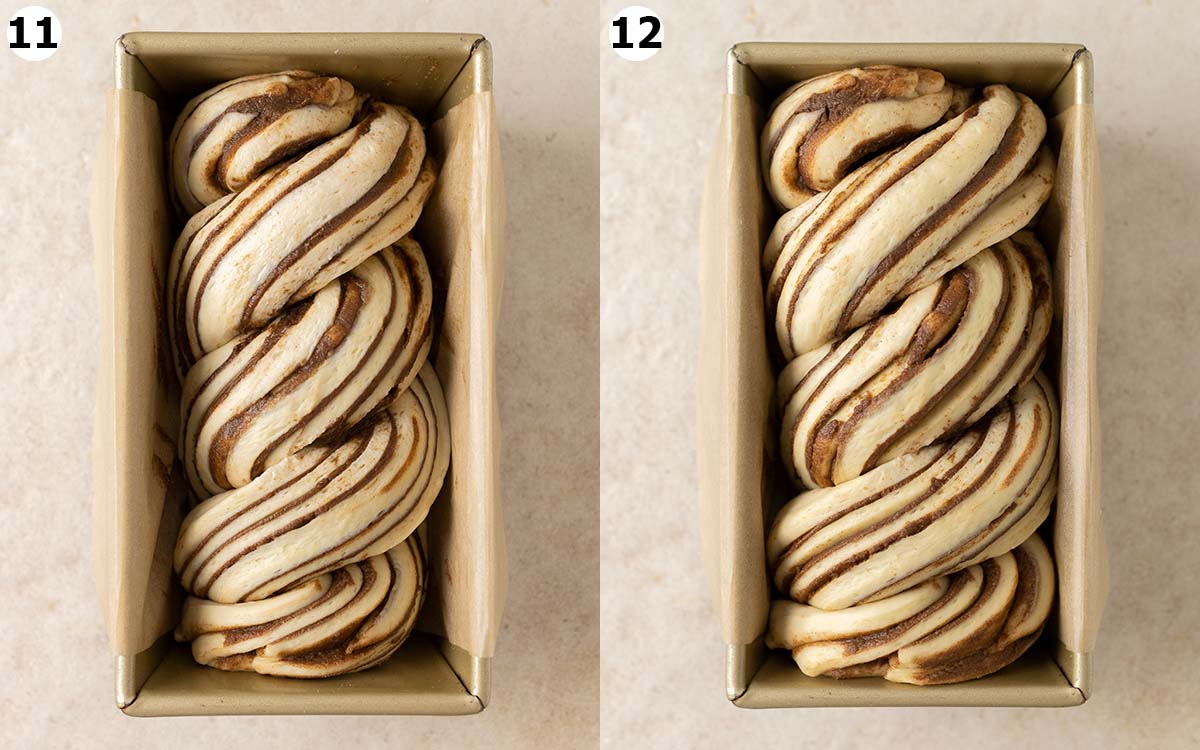
Finally, let your vegan cinnamon babka rest one last time. It doesn’t need to double in size, but should grow by around 20% and look ‘puffy’ again.
When your babka is almost ready, preheat your oven.
Baking tips
Due to the high amount of butter in babka, it can brown quickly in the oven. At the 20-30 minute mark, if your babka is slightly brown on top, carefully tent the pan with aluminum foil.
If your oven runs on the hot side or has strong top heating elements (like mine), you can also bake the babka on your lowest oven rack.
When your vegan cinnamon babka is ready, brush a simple sugar syrup on top. This adds some moisture back to the bread, and will make the surface pretty and shiny!

Serving suggestions
Vegan babka is best enjoyed on the day it is baked. However, if you serve it later, it’s best to warm it up in your microwave or oven.
Babka leftovers are also delicious in a vegan French toast casserole. Just omit the sugar in the casserole recipe as babka is already sweet.
Making babka ahead of time
You can make the dough the day before and store it in an airtight container overnight. The next day, while the dough is still cold, assemble your vegan cinnamon babka. Chilled dough is easier to shape!
I don’t recommend shaping the vegan babka and refrigerating it overnight. Bread can easily overproof, especially if you don’t check it for 8 hours. When the bread overproofs, it may stick to your plastic wrap or container, or completely collapse. It’s less risky to chill the dough before you’ve shaped it.

Customizing the recipe
Yes, these ingredients would be great in the cinnamon filling:
– Chopped walnuts, pecans
– Par-cooked apple pieces or check out my vegan cinnamon apple rolls
– Chocolate chips
You can also sprinkle a crumble on top of your babka, such as the one from my cinnamon quick bread.
I’ve tested this dough with a few brands of gluten-free flour but the results weren’t great. However, if you’ve successfully made yeasted bread using a gluten-free flour blend, it should work with this recipe.
More vegan bread recipes


Follow Rainbow Nourishments on Instagram, Facebook, TikTok and Pinterest, and subscribe via email to receive all of our latest recipes!
Vegan Cinnamon Babka
Ingredients
Babka Dough
- 2 ½ – 3 cups (315g – 375g) all-purpose plain flour, or bread flour (start with less flour and add more if needed)
- ⅔ cup (160g) dairy-free milk, warm
- ½ cup (115g) vegan butter, room temperature
- 3 tablespoons (40g) granulated sugar
- 2 ½ teaspoons instant dry yeast, (note 1)
- ¼ teaspoon salt
Cinnamon filling
- ⅓ cup (75g) vegan butter, melted and cooled
- ½ cup (100g) packed brown sugar
- 2 tablespoons (20g) ground cinnamon
- 1 teaspoon vanilla extract, optional
Simple sugar glaze (note 2)
- ¼ cup (50g) granulated sugar, or sugar of choice
- 2 tablespoons (30g) water
Instructions
- Line an 8-inch (20 cm) loaf pan with parchment paper. A longer loaf pan will work well too.
Make the babka dough:
- Add all the dough ingredients to a large bowl or stand mixer fitted with the dough hook. Mix until all ingredients come together.
- Knead the dough for 5-10 minutes. The dough is ready when it's soft, stretchy and comes away from the side of the bowl (or kneading surface). If the dough is too dry, add a dash of milk and knead again. If the dough is too sticky, add a little more flour and continue kneading.
- Place the dough in a bowl and cover it with a kitchen towel. Rest the dough in a warm place for at least 1 hour or until the dough doubles in size. If the dough doesn't double in size, place it in a WARMER spot and wait until it does.
Make the cinnamon filling:
- Add all ingredients to a bowl and mix until smooth. Allow the mixture to cool until it thickens to a spreadable consistency.
Shape the babka (note 3):
- Dust a clean surface with flour. Roll out the dough into a rectangle around 12 x 18 inches (30 x 45 cm) large and a little less than 1/4 inch (0.5cm) thick.
- Spread the filling onto the dough very close to the edge.
- Starting from the short side, roll the dough into a log. Use a sharp knife to cut the log in half lengthways. This will create two long 'strips' of dough. Carefully twirl the two strips together. Use the pictures in the above post for guidance. If your babka is longer than your loaf pan, gently squish it so it's around the same length.
- Place the vegan cinnamon babka in your loaf pan. Cover with a kitchen towel and let it rest for at least 1 hour. The babka is ready when it rises by at least 20% and looks soft and puffy.
Baking the babka:
- When your babka is almost ready to bake, preheat your oven to 170°C (340°F).
- Bake the babka for 35-45 minutes. If the top of the babka is browning too quickly (and the middle isn't cooked), loosely cover the babka with aluminum foil. The babka is ready when its surface is deep golden brown or if you insert a skewer into the middle, there shouldn't be any wet dough on it.
Sugar glaze (make this while your babka is baking):
- Add the sugar and water to a small saucepan over medium heat. Stir until the sugar has dissolved. While the babka is still hot from the oven, brush and pour the sugar glaze on top. Make sure you use up all the glaze!
- Allow the babka to cool in the loaf pan for at least 30 minutes. The babka is best eaten on the day it is baked and served slightly warm or at room temperature. For neat slices, allow the babka to cool completely and cut with a sharp serrated knife.
- Store leftovers in an airtight container for up to 2 days or in the fridge for up to 5 days. Warm up leftovers before enjoying.
Notes
- Instant yeast doesn’t need to be ‘activated’ beforehand. If you use another type of yeast, combine it with the milk from the recipe and a pinch of sugar beforehand. Wait until it bubbles then use it in the recipe.
- Alternatively, use 50g of any liquid sweetener instead of sugar and water. Heat it up and drizzle on the hot babka.
- If your dough is too soft, it will be difficult to shape. If so, place it in the fridge for 30 minutes to 1 hour to firm up. This is just for the bread’s appearance and won’t affect its taste or texture.
This post may contain affiliate links. As an Amazon Associate, I may earn a small commission from qualifying purchases at no additional cost to you.
This post may contain affiliate links. As an Amazon Associate, I may earn a small commission from qualifying purchases at no additional cost to you.

Can I Melt the Butter, or do I have to put it in soft cubes to the dough ?
Soft cubes are best, otherwise your dough will be too sticky. Hope that helps!
Can this be made with regular milk and butter?
Hi Stephanie, we haven’t tested it with non-vegan ingredients but imagine it would work similarly 🙂
Hello!! I have one question: Can I make this Babka Kosher ? And how can I make it ?
Hi Ed, I’m not Jewish so I’m not the best person to advise on how to make this kosher. To make the babka, please follow the step-by-step images in the post and the instructions in the gray recipe box.
Can this also be made gluten free?
It won’t work with a regular gluten-free flour, but it may work with a good gluten-free bread flour